
The science in plain English
Tyre sealant coats the inside of the tyre and, when something punctures it, the air pressure pushes the sealant into the hole to seal it. Here is how Drivesafe’s gel does it, and why gel works better than a liquid.

The short answer
Tyre sealant is pumped into the tyre through the valve. As the wheel turns, it spreads over the inner tread and forms a protective coating. When a nail or other sharp object penetrates the tyre, the air pressure inside immediately forces the sealant into the puncture, where it forms a flexible, airtight seal within seconds.
Because the hole is sealed straight away, the tyre stays at its correct operating pressure. That matters: an underinflated tyre builds up heat, and heat build-up is a leading cause of tyre failure and blowouts. With Drivesafe, you can carry on with your journey or your work instead of stopping for a roadside repair.
Which Grade Do I Need?Step by step
01
Drivesafe is installed through the tyre valve while the wheel rotates, so there is no need to take the tyre off the wheel.
02
The gel spreads evenly across the inner tread area. On commercial vehicles it forms a durable coating on the inner crown within a few miles.
03
When a puncture happens, air pressure forces the gel into the hole, forming a flexible, airtight seal from the inside.
04
The coating stays active for the life of the tyre, guarding against punctures and natural air loss through the casing.
Before or after the puncture
Emergency tyre sealants come in aerosols and repair kits. You use them after you have a puncture, usually at the roadside, to get you to a garage.
Preventative tyre sealant, like Drivesafe, is installed before a puncture happens. It is already inside the tyre, so it seals the puncture the moment it occurs, often before you would notice any air loss. There is no need to stop on a busy road or in a field to use a kit.
Drivesafe is made for prevention, in grades for cars, commercial vehicles and heavy plant.
Fitted in advance, ready to work
Seals the puncture as it happens
Keeps tyre pressure correct
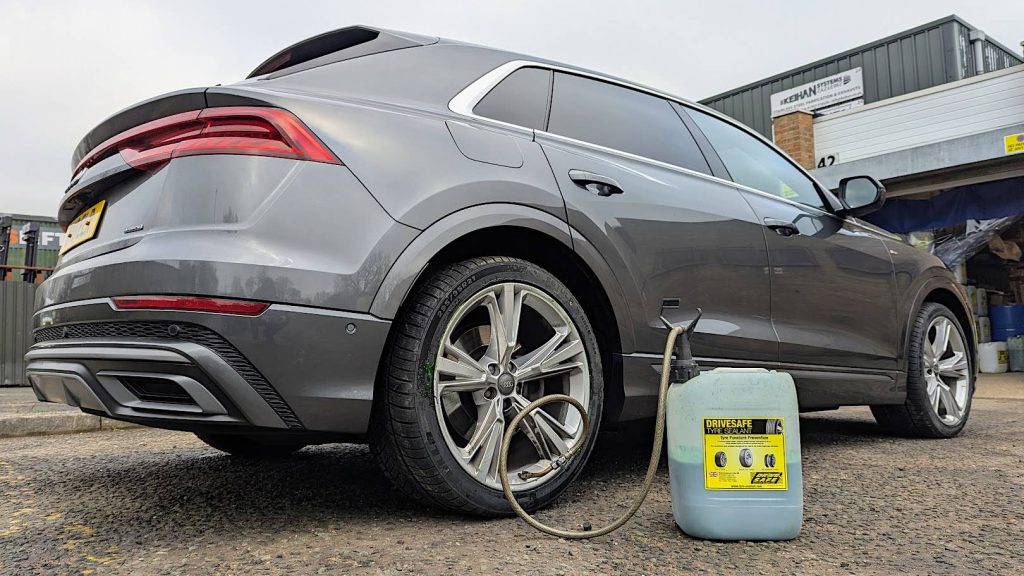
Stable, fibre-free formula
Many competing tyre sealants are thin liquids that have to be stirred or shaken before use. That separation carries on inside the tyre. Drivesafe’s gel is different.
The gel does not separate, settle or lose its sealing capability over time, so protection stays consistent.
Because it stays evenly spread inside the tyre, it avoids the uneven weight distribution and wheel balance problems that separated liquids can cause.
Drivesafe’s fibre-free gel does not clump together inside the tyre, unlike sealants that rely on fibres.
The formula resists heat build-up within the tyre, for consistent performance under heavy loads and long distances.
The gel keeps a stable composition in the container, with a three-year shelf life from the date of purchase.
It is water-soluble, so it rinses out with water alone, letting the tyre be inspected and repaired to industry standards.
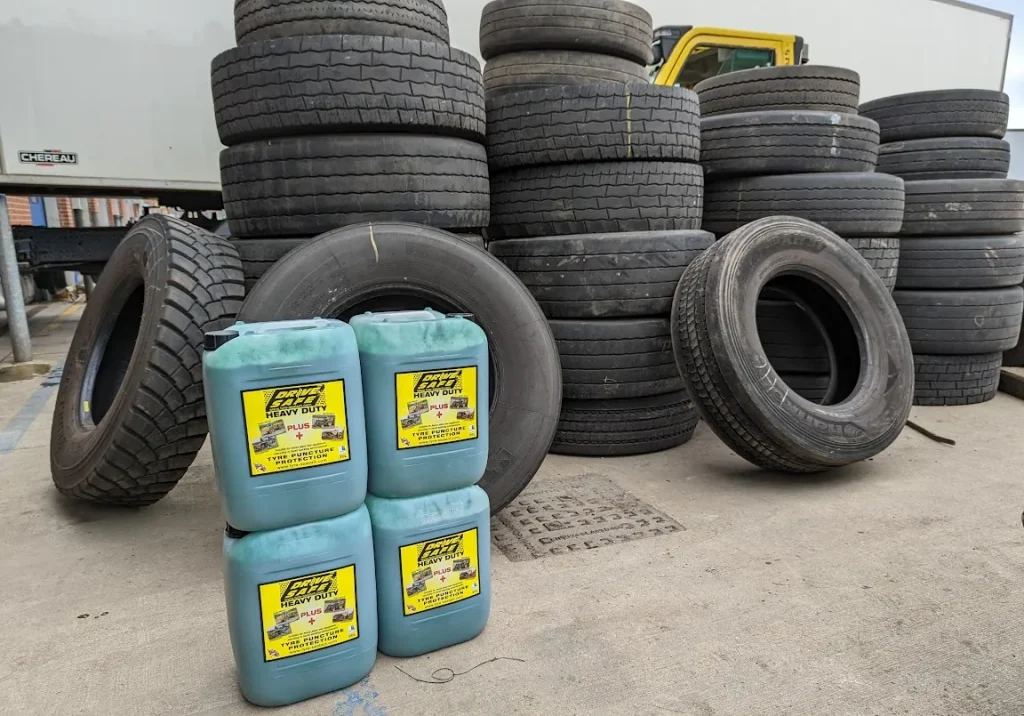
After a puncture
With Drivesafe, yes. Because the gel is water-soluble, it can be safely washed out of the tyre using only water, with no special equipment or chemicals. The casing can then be examined and repaired according to industry standards, provided no secondary damage has occurred.
Drivesafe is non-hazardous, non-flammable and non-toxic, so tyre technicians can remove and handle treated tyres without additional precautions.
Tyre Sealant FAQsThree grades
Drivesafe tyre sealant comes in grades for road vehicles, commercial fleets and heavy off-road plant. Choose the grade for your vehicle, or ask us if you are not sure.
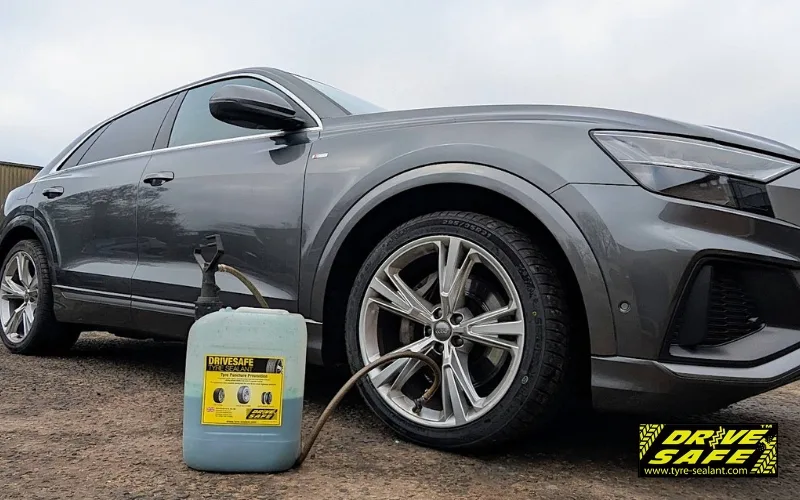
Pre-puncture protection for cars, with instant sealing of punctures of 3–5 mm in the crown area.

Fibre-free, heat-resistant gel for trucks, buses and fleets, sealing punctures of 6–8 mm on average.
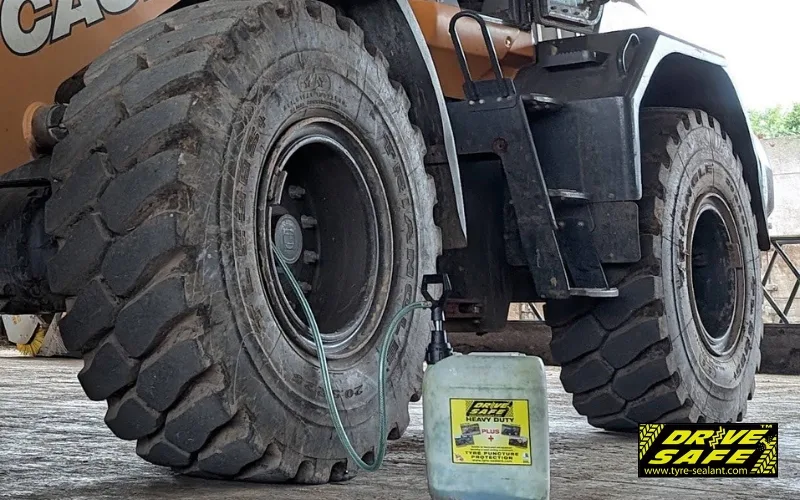
The multi-purpose grade and PLUS+ for off-road plant, agricultural, construction and commercial tyres.
Buy Drivesafe tyre sealant online, or talk to us about the right grade for your vehicles: call 07971 844743 or WhatsApp us.